
Examine the existing operation.
Review the website, application pathways, giving process, records, and daily workflows.
A case examination of what happens when a growing ministry has its mission in place, but needs the operational infrastructure to support the work.
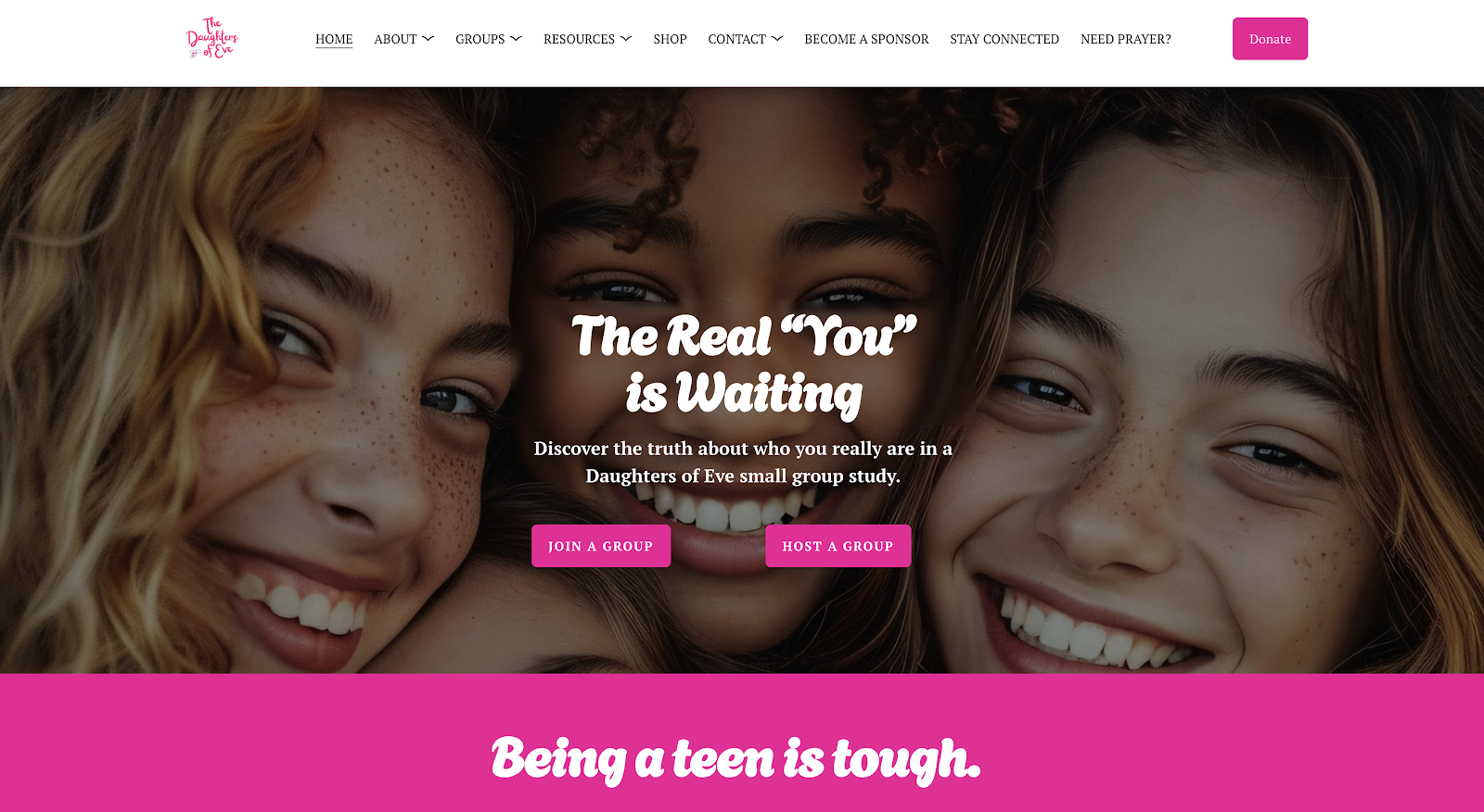
When this project began, The Daughters of Eve had an established ministry purpose but lacked a connected operational backend.
Applications came through email without a defined tracking pipeline. Leader approval had no consistent path from interest to launch. Donation processing created friction, and reporting was difficult to manage.
Curriculum, governance documents, and applications were spread across devices and inboxes. The website described the ministry, but didn't effectively guide visitors toward their next step.
The problem wasn't a lack of vision. The systems behind the work needed attention.
We began by identifying where time, attention, and revenue were leaking, then separated technical bottlenecks from decisions that required leadership.
Review the website, application pathways, giving process, records, and daily workflows.
Determine where information gets lost, which handoffs depend on memory, and where people encounter friction.
Identify which problems need a technical solution and which require decisions from leadership before anything is built.
The build connected the website, applications, records, communication, and internal administration into more defined operational processes.
A Participants database was created to track each applicant through the ministry's review and placement process.
FIG. 02 — PARTICIPANT PIPELINE STRUCTURE
The Leaders database tracks the steps required before a leader begins facilitating a group.
FIG. 03 — LEADER APPROVAL PIPELINE (UI REPRESENTATION)
The operational environment brought together a Task Board, Communication Log, Documents Hub, and Small Groups & Events database.
A centralized credentials vault and recorded handoff tutorials supported access continuity during personnel transitions.
FIG. 04 — ADMINISTRATIVE HUB & TASK BOARD (UI REPRESENTATION)
Implementation extended beyond the technical platforms to include documentation, communication planning, volunteer support, and creative production.
Centralized email performance, board and administrative meeting notes, and testimonials for easier review.
Developed an Email Content Bank and 2026 Marketing Calendar to support consistent donor communication.
Built a Prayer Intercessors Team roster and Staff Application Hub to better organize volunteer and staff processes.
Designed Leader's Guide and Girl's Guide covers and researched cost-effective print vendors for ministry materials.
These outcomes describe the operational improvements delivered through the build. They are not claims of measured revenue, conversion, or time savings.
Donation processing was moved to a platform supporting recurring giving without platform fees.
Participant applications gained a defined status and follow-up process.
Leader approval gained documented stages from interest through launch.
Operational documents and tasks were organized into a shared hub.
Donor communication gained a planned content calendar and organized resource bank.
Leadership received more defined processes, responsibilities, and supporting documentation.
Project screenshots and mockups are illustrative. Private participant and leader records are not displayed.
Fruitful Expansions builds the infrastructure behind nonprofits, ministries, and businesses. We start by examining the existing operation, then determine what needs to be fixed, built, or documented.
Book a Consultation ↗